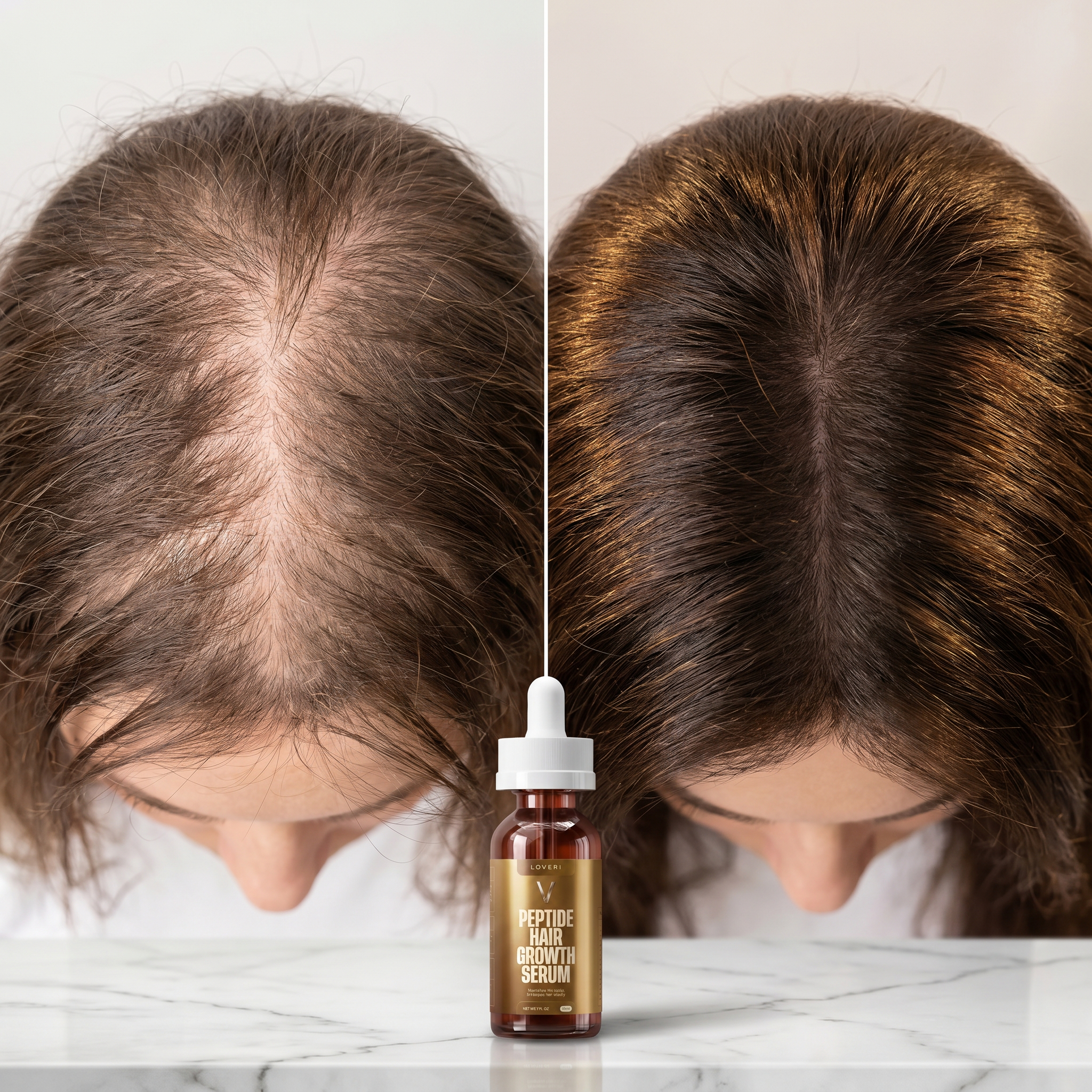
Hair Thinning Is More Common Than You Think
Over 50% of women and 70% of men will experience some form of hair thinning during their lifetime. Yet the beauty industry has spent decades offering solutions that treat the symptom — not the cause. Thickening shampoos. Volume sprays. Biotin supplements with no real clinical evidence behind them.
The problem isn't that people aren't trying. The problem is that most hair loss products are designed around what looks good on a label, not around what the science actually says. To reverse hair thinning, you first need to understand what's actually happening inside your follicles.
The Biology of Hair Thinning
Every hair follicle cycles through three phases: anagen (active growth), catagen (transition), and telogen (rest/shedding). In a healthy scalp, 85–90% of follicles are in the anagen phase at any given time. Thinning occurs when this balance is disrupted.
The most common disruption is follicle miniaturization: a process where each successive hair cycle produces a slightly thinner, shorter strand. Over time, miniaturized follicles produce hair so fine it becomes invisible. Eventually, without intervention, the follicle can stop producing hair altogether.
The cause of miniaturization is almost always the same: a combination of hormonal signaling (particularly DHT sensitivity), chronic low-grade scalp inflammation, and reduced nutrient delivery to the follicle base.
To reverse hair thinning, you don't need to coat your hair in protein. You need to give your follicles better instructions.
The 5 Most Common Causes of Hair Thinning
- Hormonal shifts: Estrogen decline, post-pregnancy changes, or elevated DHT activity all affect the follicle lifecycle. This is the most common driver of diffuse thinning in women over 30.
- Nutritional deficiencies: Ferritin (stored iron), zinc, and biotin are directly involved in follicle cell metabolism. Low levels correlate strongly with increased shedding and reduced growth rate.
- Chronic scalp inflammation: An inflamed scalp creates a hostile environment for follicle activity. Seborrheic dermatitis, product buildup, and even stress-induced cytokine activity all disrupt the follicle cycle.
- Telogen effluvium: Triggered by physical or emotional stress, illness, surgery, or nutritional shock — causes large numbers of follicles to simultaneously enter the resting phase, leading to sudden, diffuse shedding.
- Mechanical and chemical damage: Chronic heat styling, tight hairstyles (traction alopecia), and harsh chemical treatments weaken the follicle attachment and damage the scalp barrier over time.
Why Most Hair Loss Products Fail
The reason the market is full of products that don't work is surprisingly simple: they operate at the surface level. Thickening shampoos add texture to the existing strand. Strengthening conditioners coat the shaft. Even most "hair growth" serums contain caffeine or castor oil — ingredients with mild effects at best, and no mechanism for addressing the actual biology of follicle miniaturization.
Real hair thinning treatment requires reaching the follicle — specifically the dermal papilla, the command center of each hair strand. That means using ingredients small enough to penetrate the scalp, stable enough to survive topical delivery, and scientifically validated to signal follicle cells in ways that counteract the miniaturization process.
How Peptides Address the Actual Problem
Bioactive peptides are uniquely positioned to work at the follicle level. Unlike large protein molecules that sit on the scalp surface, targeted peptides like Sh-Polypeptide-1 and Biotinoyl Tripeptide-1 can reach the dermal papilla and deliver precise biological signals:
- Sh-Polypeptide-1 extends the anagen phase and stimulates keratinocyte production — directly counteracting the shortened growth cycles of thinning hair.
- Biotinoyl Tripeptide-1 reinforces the anchoring structures of the hair bulb, slowing the process of follicle miniaturization.
- Oligopeptide-41 reduces the inflammatory cytokine activity that creates a hostile follicle environment — addressing one of the key root causes of chronic thinning.
- GHK-Cu (Copper Peptide) promotes capillary formation around follicles, increasing blood flow and nutrient delivery to the cells that need it most.
This is not a cosmetic fix. This is working with the biology of the follicle — not around it.
What to Expect from a Peptide Protocol
Peptide-based hair growth protocols operate on the timeline of the hair cycle, not the marketing cycle. The anagen phase lasts 2–6 years, but follicle response to topical peptides typically becomes measurable within 8–16 weeks of consistent daily use.
Most users notice a reduction in daily shedding within the first 4–6 weeks. Strand density improvements — new growth and reduced miniaturization — are typically visible after 12 weeks. Full protocol results are best assessed at the 6-month mark.
The single biggest factor in outcome? Consistency. A peptide serum used sporadically delivers sporadic results. Daily application, directly to the scalp, is where the clinical evidence is built.
Stop managing
thinning. Reverse it.
The Loveri Peptide Hair Growth Serum Starter is designed for daily scalp use — five bioactive peptides, full ingredient transparency, and a formula built around what the science actually says about hair loss.
Start Your Peptide Protocol →